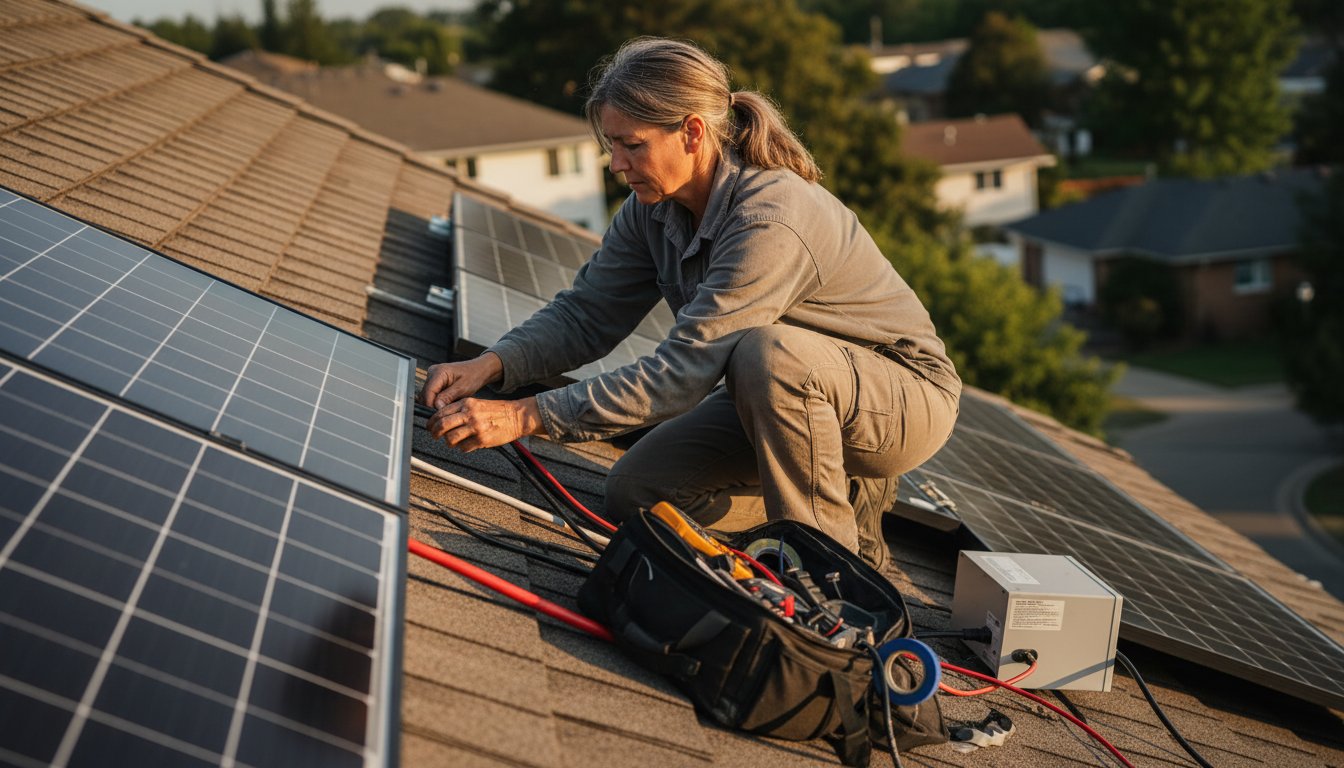
This guide walks through exactly what changes and what doesn't when an electrician adds PV to their business. For the general route into solar PV, see how to become a solar PV installer and what qualifications you need.
What MCS actually requires — and what it doesn't
MCS 025, the Competency Standard, gives three routes for a Nominated Technical Person to evidence competency: a named qualification, MCS-approved non-regulated training, or an MCS-approved independent competency assessment. That third route is defined precisely for people like an experienced electrician without a PV-specific award: "An MCS approved assessment of competency... Assessments of this nature are independent of training provision and support a competency assessment of individuals who typically do not hold formal qualifications or personal certifications."
Nothing in MCS 025 gates this route by occupation — an electrician can use it the same as anyone else. The document doesn't spell out the assessment's exact content or format itself; that detail sits with the MCS-approved assessment centres listed on MCS's own site, which set their own process for what the assessment actually involves.
What general electrical qualifications genuinely don't cover
This is worth being precise about, because MIS 3002 itself names the actual gap rather than leaving it to guesswork. Its own text on installation hazards says it plainly: "The installation of PV systems presents a unique combination of hazards – due to risk of electric shock, falling and simultaneous manual handling difficulty... electricians would be familiar with electric shock hazards but not with handling large objects at heights."
Beyond the physical working-at-height and manual-handling dimension, three things sit genuinely outside standard electrical training:
- DNO notification (G98/G99). MIS 3002 makes this the MCS Contractor's own responsibility — it's a renewables-specific regulatory process that 18th Edition or NVQ Level 3 training simply doesn't touch. See our dedicated guide to G98/G99.
- PV-specific commissioning standards. MIS 3002 defers to the IET Code of Practice for Grid Connected Solar PV Systems and BS EN 62446-1 for commissioning and test procedures — documents outside a standard electrical qualification's syllabus.
- PV-specific handover documentation. MIS 3002 requires a Model Handover Document — a customer documentation pack distinct from a standard electrical installation certificate.
One further point worth flagging honestly: DC-side wiring and isolation for PV arrays sits in BS 7671's dedicated Section 712 (Solar Photovoltaic Power Supply Systems) — a specialist section most general electrical training wouldn't have covered unless a PV-specific module was included. We couldn't verify this detail against BS 7671's own text directly (it's a paid BSI standard, not freely available), so treat it as a reasonable inference from how BS 7671 is structured, not a direct MCS quote.
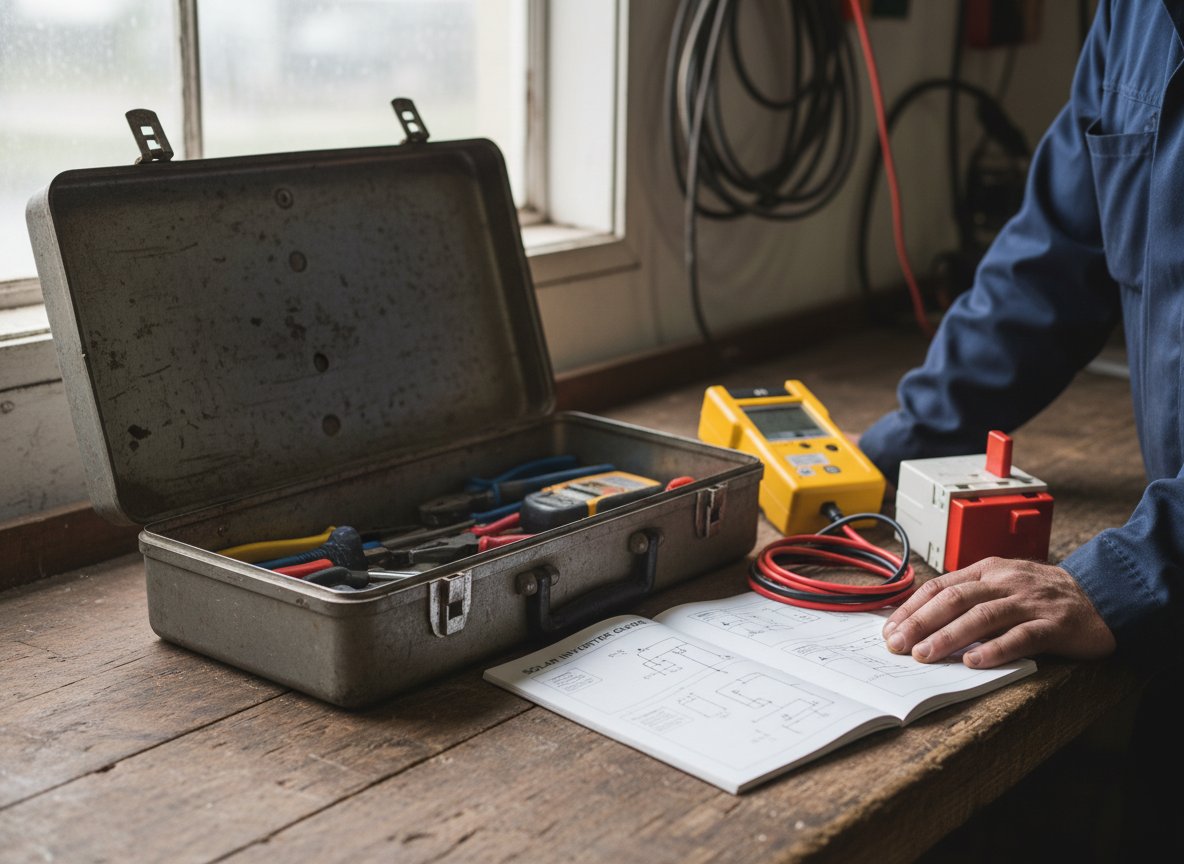
The Part P angle
Solar PV is explicitly within scope of Part P of the Building Regulations. Approved Document P names it directly: Part P applies to electrical installations in dwellings and to parts of the installation outside the dwelling, "for example fixed lighting and air conditioning units attached to outside walls, photovoltaic panels on roofs." Installing a new circuit — which a grid-tied PV system typically involves — makes the work notifiable, unless a registered competent person self-certifies it instead.
Here's the detail that matters for an electrician: general Part P or Competent Person Scheme registration does not automatically cover PV self-certification. Approved Document P itself never mentions MCS by name — the link between MCS certification and Part P self-certification is made by the scheme operators, not central government guidance. NICEIC's own January 2026 scheme guide confirms the practical mechanics: "This scheme and other NICEIC schemes, including the NICEIC Competent Person scheme, can be bundled for no extra cost. This will allow your business to self-certify work and notify the local building control body through the NICEIC Online Certification System... your NICEIC assessment for both schemes will take place at the same time."
So an electrician registered for general domestic work still needs to actively add the MCS PV scope — it isn't included automatically, even though the assessment visit itself can often be combined with their existing one.
What NICEIC and NAPIT actually require to add PV
Confirmed directly from both bodies' own current guidance, the pattern is consistent:
- NICEIC requires a separate online application for the "MCS Approved Installer" scheme (which covers solar PV alongside other technologies like heat pumps and battery storage), with the Technical Supervisor's qualifications and insurance documents submitted, a non-refundable application fee, and its own assessment — which can be scheduled alongside an existing Competent Person assessment at no extra cost, but isn't automatic from holding that registration alone.
- NAPIT treats solar PV as its own qualifications category (List 13 in its Registration Guide), separate from the general Wiring Regulations list electricians are assessed against for domestic work. Its own guidance states: "If you have applied for Solar Photovoltaic (PV) Systems Installation, you must have attended training and competence assessment specific to demonstrate knowledge, understanding and application of BS 7671 and shall include the IET Code of Practice (CoP) for Grid Connected Solar Photovoltaic Systems." Acceptable qualifications listed include BPEC's Level 3 Award, City & Guilds 2399-13/2399-14, and EAL and LCL equivalents.
One partial exception: an installer transferring their registration from another certification body, or re-registering within 2 years of a previous registration, can sometimes carry over existing scope without fresh qualification evidence — but that's a continuity provision for people moving between schemes, not a route for adding PV to a business for the first time.
How common is the electrician-to-PV-installer path?
We looked for MCS's own data on what share of certified PV installers previously worked as electricians, and found none published — MCS's public figures count certified businesses and year-on-year growth, not the prior occupational background of the people within them. We're not going to state a specific percentage here, because it isn't something MCS has published; what's confirmed is simply that the route exists and is well-supported by both MCS's own competency routes and the major certification bodies' scheme design.
Common mistakes
- Assuming electrical qualifications alone are sufficient to start installing PV commercially. MCS doesn't mandate a named qualification, but your certification body (NICEIC, NAPIT) still requires evidence of PV-specific competency before adding the scope.
- Believing Part P / Competent Person registration automatically covers PV self-certification. It doesn't — PV sits as a separate scheme scope that has to be actively added.
- Underestimating the DC-side and working-at-height gap. These are genuinely new skill areas, not a formality, even for an experienced electrician.
- Skipping DNO notification because "the electrical work is done." G98/G99 compliance is a separate, ongoing responsibility on every PV job, confirmed directly in MIS 3002.
- Not checking whether an assessment visit can be combined. Both NICEIC and NAPIT structure their schemes so an existing registered contractor can often add PV competency efficiently — ask directly rather than assuming a fully separate process is required.
Frequently asked questions
Can a qualified electrician legally install solar PV without a PV-specific qualification?
MCS's own standard doesn't mandate a named qualification — an experienced electrician can use the independent competency assessment route instead. But most certification bodies and the practical realities of the job (DC-side work, DNO notification, working at height) mean most electricians still pursue specific PV training.
Does my existing NICEIC or NAPIT electrical registration cover solar PV?
No. Both bodies treat solar PV as a separate scope requiring its own evidence and assessment, even though the assessment visit can often be scheduled alongside your existing one at no extra cost.
What does Part P mean for solar PV specifically?
Solar PV installations are explicitly within Part P's scope, and typically count as notifiable work because they usually involve a new circuit. A Competent Person Scheme membership lets you self-certify instead of notifying building control directly — but only once PV is added as a registered scope.
What's the single biggest skills gap between general electrical work and solar PV?
Based on MCS's own standard, it's the combination of DC-side electrical hazards (different from standard AC domestic wiring), working at height, and the DNO notification process (G98/G99) — none of which are part of general 18th Edition or NVQ electrical training.
Is there data on how many PV installers come from an electrical background?
MCS doesn't publish this breakdown. Its public data covers certified business growth, not the prior trade background of the individuals involved.
How Nexis Academy can help
Nexis Academy is a City & Guilds Approved Centre (T91185) in Manchester. We currently deliver internal wall insulation training, with more trade and construction courses in development, including solar PV. We do not yet offer solar PV qualifications, so please register your interest to hear when that changes.
See also how to become a solar PV installer and what qualifications you need to install solar PV.
Sources
- MCS, MCS 025: The Competency Standard, v2.0, issued 7 September 2022 — the independent competency assessment route.
- MCS, MIS 3002:2025, v1.0, issued 1 January 2025 — installation hazards, DNO notification responsibility, handover documentation.
- GOV.UK, Approved Document P, 2013 edition — Part P scope and notifiable work.
- NICEIC, MCS Approved Installer Scheme Guide, January 2026 — scheme-bundling and assessment process.
- NAPIT, Registration Guide to Qualification Requirements — Electrical, v8.0 — solar PV as a separate qualifications category (List 13).