
Most "how to spot a gas course scam" content online is either vague or simply doesn't exist from an official source. Rather than inventing a warning that isn't there, this guide gives you the actual verification method the official rules support, plus the practical questions to ask any provider before you pay. For what happens after training, see how to become a Gas Safe registered engineer and how long it takes.
Start here: the actual rule a course has to meet
Gas Safe Register's own guidance for prospective engineers is unambiguous about where the authority sits: "All evidence of gas safety competence is sent by the awarding body electronically directly to Gas Safe Register and is only recognised once received from the awarding body concerned." And on training specifically: "It's crucial that the training programme you choose is industry recognised and meets Gas Safe requirements. An up to date list of recognised training programmes and qualifications is available on the IGEM Website."
That's the official chain of trust: IGEM (the Standard Setting Body) authorises specific organisations as "Recognisers of Training," those organisations approve individual training centres, and only evidence of competence from that recognised chain is accepted by Gas Safe Register. A course that sits outside this chain — however good the training itself might be — will not get you registered.
The actual directory you can check
IGEM's Training Provider Directory (published as MR0497, currently version 10, December 2025) is a public document that lists, by region:
- "Recognisers of Training" — the organisations IGEM has authorised to recognise gas training programmes, including AdSkills Certification, Blueflame Certification, BPEC Services, Cert-ain, City and Guilds, ERS Certification, EAL, LCL Awards, NICEIC Certification and UK Certification, each shown against the categories of gas work they cover (domestic natural gas, metering/emergency service provider, LPG, non-domestic/LPG).
- "Approved Gas Training Centres" — individual colleges and training centres, organised by UK region, with addresses and the specific categories each is approved to deliver.
This directory is maintained by Energy & Utility Skills (EUS) and published via their site. Before paying for any course, search this directory for the specific training centre's name and confirm it's listed for the category you want. The directory itself carries a caveat worth repeating honestly: it states the information was "correct at the time of web publishing," not in real time — so for anything time-sensitive, verify directly with the Recogniser of Training named against that centre.
A genuine complication, worth being upfront about: the Standard Setting Body function for gas transferred from EUS to IGEM from 1 April 2026. EUS's own transition statement says it will continue running the "recognition of training" process even after the handover, but no single source makes this fully clear going forward. If you're reading this well after November 2026, check both igem.org.uk and euskills.co.uk for the current version of the directory, since responsibility for publishing it may have moved.
A practical checklist before you pay
Based on what's actually verifiable through official channels:
- Find the centre's name in IGEM's Training Provider Directory (search for the current version at igem.org.uk or euskills.co.uk), and confirm it's listed for the specific gas category you want to train in.
- Ask which Recogniser of Training backs the course (BPEC, City & Guilds, EAL, LCL Awards, etc.) and cross-check that name against the directory too — a provider should be able to answer this without hesitation.
- Remember that a certificate alone proves nothing until Gas Safe Register has received it electronically from the awarding body. A printed certificate handed to you by the provider is not, by itself, your registration evidence.
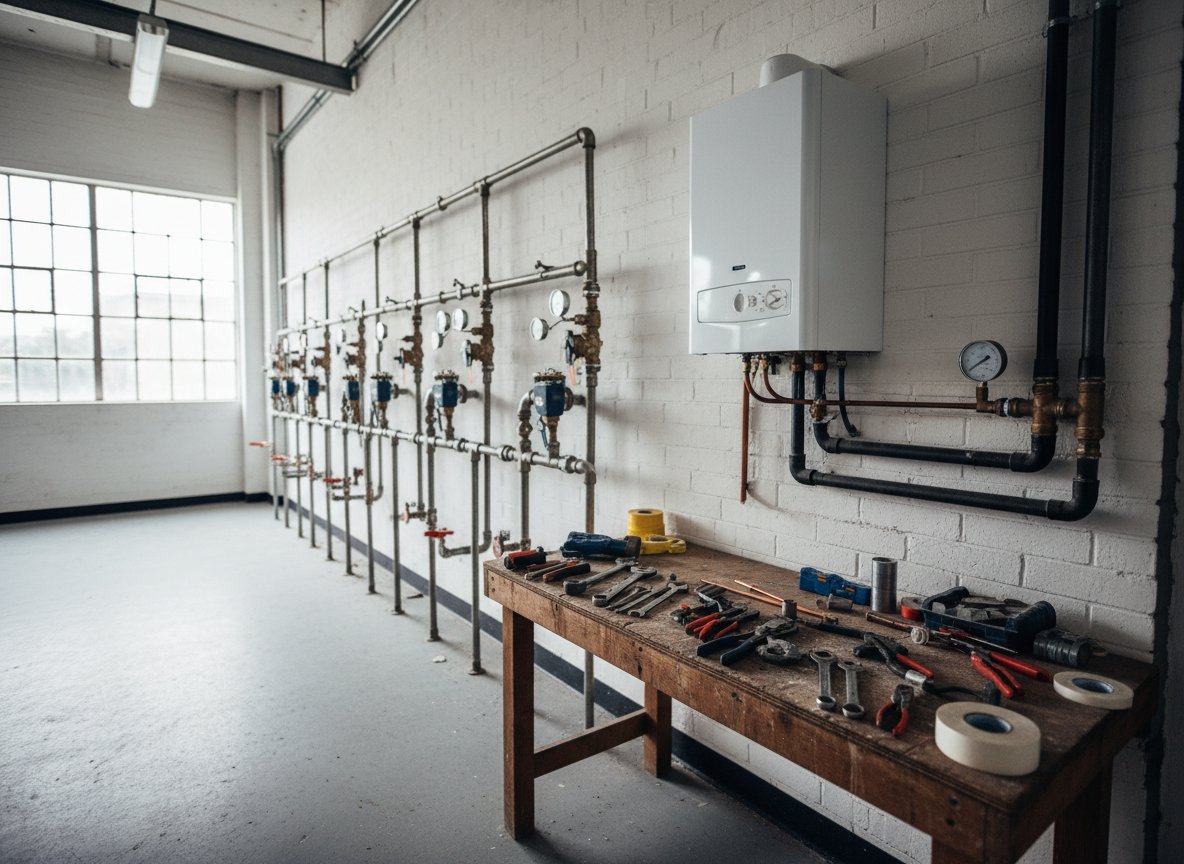
- Visit the centre in person before paying. A legitimate gas training centre has its own practical training facilities you can see — pipework rigs, appliances, assessment areas. Be wary of any provider that can't show you a real facility or that sub-lets premises you can't inspect.
- Confirm in writing where the ACS assessment itself will actually take place. Don't assume it happens at the same site as your training unless the provider confirms this directly.
- Be cautious of pressure selling and unrealistic promises — doorstep sales tactics, vague or unnamed "certification," or guarantees that skip past the training and placement requirements entirely. We should be clear that this specific guidance comes from a training-provider source (not a regulator), and it's general to all trades, not gas-specific — but the underlying logic holds: if a provider can't clearly name the awarding body, the exact qualification, and where assessment happens, that's worth pausing on.
- Check how many past students are actually working as registered gas engineers, where a provider is willing to put you in touch with former students or publish verifiable outcomes.
What official guidance does and doesn't say
To be precise about where the line is between confirmed fact and reasonable inference:
- Confirmed, official: the chain of recognition (IGEM → Recognisers of Training → approved centres), the existence of the public directory, and Gas Safe Register's own instruction to check IGEM's list before choosing a course.
- Not found, despite looking: any HSE, IGEM or Gas Safe Register page specifically warning about "gas course scams," listing red-flag phrases to watch for, or naming known bad actors. If you've seen a claim online that a specific regulator publishes a scam warning list for gas training, we couldn't verify it and would treat it with caution until you can point to the actual page.
We'd rather tell you honestly that this second category doesn't exist than invent an "official warning" that sounds reassuring but isn't real.
Common mistakes
- Trusting marketing claims over the directory. A slick website or "guaranteed job" promise isn't evidence of recognition — the directory listing is.
- Assuming any City & Guilds, BPEC or EAL branding means the specific course is approved. These are Recognisers of Training, but each individual centre still needs its own approval under them — check the centre itself is listed, not just that it name-drops a recognised body.
- Paying a large upfront sum before visiting the centre. If a provider resists letting you see their actual training facility before you commit, treat that as a reason to slow down.
- Not asking where the ACS assessment happens. Training and assessment aren't always at the same location, and a mismatch (a cited real example: a candidate sold a course in one town but told to sit the exam in another, for an unrelated trade) can add unexpected cost and travel.
- Assuming the directory is instantly up to date. It's a periodically published PDF, not a live database — verify anything time-sensitive directly with the named Recogniser of Training.
Frequently asked questions
Is there an official list of recognised gas training providers?
Yes. IGEM's Training Provider Directory (currently MR0497 v10, December 2025, published via euskills.co.uk) lists every organisation authorised to recognise gas training and every approved training centre, by UK region and gas category.
Does Gas Safe Register publish a warning about gas training scams?
No — we looked specifically for this and found no dedicated HSE, IGEM or Gas Safe Register page warning about gas course scams. This is a genuine gap in official guidance, not something we're aware of and simply not covering.
How do I know a certificate from a course will actually count?
Gas Safe Register only recognises evidence of competence sent electronically, directly from a recognised awarding body. A certificate or printout from the training provider itself isn't sufficient on its own — confirm with the provider that your evidence will be submitted this way.
What's the single best check before paying for a course?
Search the training centre's exact name in IGEM's current Training Provider Directory and confirm it's listed for the category you want. If it isn't there, ask the provider directly why, before paying anything.
Should I be worried about "guaranteed job" promises?
Treat them as a reason to ask more questions, not as proof of a scam. No official source names this specific phrase as a red flag, but a provider making guarantees that bypass the actual training and placement requirements set out in the training specification is worth scrutinising.
Does training alone get me Gas Safe registered?
No. Training is only the first stage. You then need to pass the relevant ACS assessment, and your awarding body has to send that evidence electronically to Gas Safe Register before you can apply to register — see our guide to how to become a Gas Safe registered engineer for the full route.
How Nexis Academy can help
Nexis Academy is a City & Guilds Approved Centre (T91185) in Manchester. We currently deliver internal wall insulation training, with more trade and construction courses in development, including gas. We do not yet offer gas qualifications, so please register your interest to hear when that changes.
See also how to become a Gas Safe registered engineer and how long it takes to become a gas engineer.
Sources
- IGEM, "Training for new entrants into the gas industry" and "Recognition of training".
- Energy & Utility Skills Group, "Training Provider Directory," MR0497 v10, December 2025.
- Energy & Utility Skills Group, "Governance for Recognition of Training," October 2017 — the Authoriser/Recogniser recognition process and audit cycle.
- Gas Safe Register, "Path To Gas Safe Registration".